
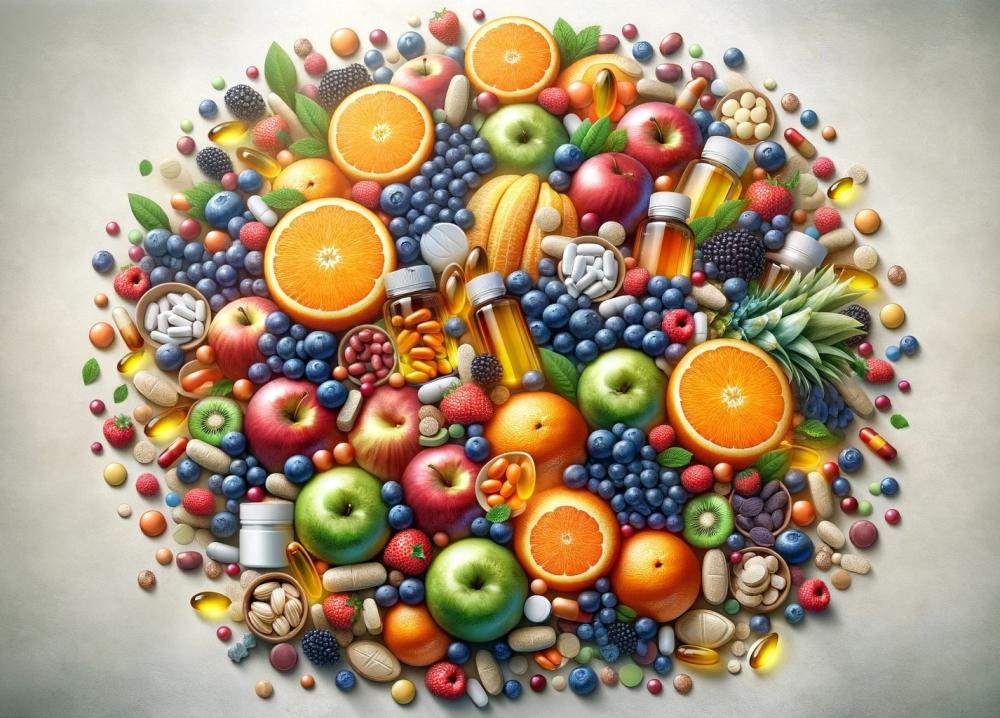

The importance of multivitamins for children and their role in healthy development and growth.
Multivitamins play a vital role in a child's health and development, as they are essential elements that ensure the proper functioning of vital processes in the body.
What are multivitamins ?
They are organic compounds that the body needs in small quantities. It cannot produce them on its own and must be obtained through diet or nutritional supplements.
The importance of multivitamins for children:
Healthy growth and development: Vitamins contribute to building bones, teeth, and muscles, enhance nervous system function, and stimulate the immune system, which helps a child grow and develop properly.
Maintaining healthy body functions: Vitamins regulate many vital processes in the body, such as nutrient absorption, energy production, red blood cell formation, and maintaining healthy skin, hair, and eyes.
Boosting immunity: Some vitamins, such as vitamin C and vitamin A, help strengthen the immune system and fight infection.
Improving mental performance: Some vitamins, such as B vitamins, contribute to improving brain function, memory, and concentration.
Maintaining digestive health: Some vitamins, such as B vitamins, help improve digestion and nutrient absorption.
Here is the most important group of vitamins for children.
Information every mother should know about each vitamin:
Vitamin C: The cornerstone of building a child's health
Vitamin C (ascorbic acid) is one of the most important nutrients that plays a vital role in a child's health and growth.
The importance of vitamin C for children:
- Strengthening the immune system: Vitamin C helps boost immune system function and fight infection by stimulating the production of white blood cells, the first line of defense against disease.
- Healthy growth and development: Vitamin C plays an important role in the formation of collagen, a protein necessary for building bones, teeth, cartilage, and blood vessels.
- Iron absorption: Vitamin C helps improve iron absorption from the intestine, which is essential for the formation of red blood cells and the prevention of anemia.
- Maintaining healthy skin and hair: Vitamin C helps protect skin cells from damage caused by free radicals, which maintains healthy and radiant skin. It also enhances hair health and prevents hair loss.
- Improve mental performance: Vitamin C can help improve brain function, memory, and concentration.
- Reducing stress: Vitamin C helps reduce levels of cortisol, the stress hormone, which contributes to improving a child's mood.
Symptoms of vitamin C deficiency:
- Weakened immune system: increased susceptibility to infection.
- Fatigue and exhaustion.
- Dry skin.
- Hair breakage.
- Bleeding gums.
- Joint pain.
Vitamin D: Child's Healthy Sunshine
Vitamin D (the sunshine vitamin) is an essential nutrient for a child's health and growth, as it plays an important role in many vital processes in the body.
The importance of vitamin D for children:
- Calcium absorption: Vitamin D helps absorb calcium from the intestine, which is essential for healthy bones and teeth.
- Bone growth: Vitamin D contributes to bone growth and strength, reducing the risk of rickets.
- Nervous system functions: Vitamin D helps regulate nervous system functions, which contributes to improving brain function, memory, and concentration.
- Strengthening the immune system: Vitamin D enhances the functions of the immune system, which helps fight infection.
- Reducing the risk of chronic diseases: Vitamin D can help reduce the risk of some chronic diseases, such as heart disease and cancer.
Symptoms of vitamin D deficiency:
- Rickets: a disease that affects children and leads to weak and deformed bones.
- Bone and muscle pain.
- Fatigue and exhaustion.
- Weak immune system.
- Hair loss.
Zinc: A building block for child health
Zinc is an essential nutrient for a child's health and growth, as it plays an important role in many vital processes in the body.
The importance of zinc for children:
- Healthy growth and development: Zinc contributes to the growth and development of all body tissues, including bones, muscles, skin, and hair.
- Strengthening the immune system: Zinc enhances the functions of the immune system, which helps fight infections.
- Wound healing: Zinc helps wounds heal faster.
- Brain function: Zinc contributes to brain function, memory, and concentration.
- Sense of smell and taste: Zinc is essential for the sense of smell and taste.
Symptoms of zinc deficiency:
- Weakened immune system: increased susceptibility to infection.
- Slow growth.
- Hair loss.
- Dry skin.
- Weakened sense of smell and taste.
- diarrhea.
Vitamin A: Sunshine, Eyesight, and Child Health
Vitamin A (retinol) is an essential nutrient for a child's health and growth, playing an important role in many vital processes in the body.
The importance of vitamin A for children:
- Eye health: Vitamin A is essential for vision in low light conditions (night vision) and helps protect the eyes from dryness and infection.
- Healthy growth and development: Vitamin A contributes to the growth and development of all body tissues, including bones, muscles, skin, and hair.
- Strengthening the immune system: Vitamin A enhances the functions of the immune system, which helps fight infection.
- Brain function: Vitamin A contributes to brain function, memory, and concentration.
- Skin Health: Vitamin A helps maintain healthy, glowing skin.
Symptoms of vitamin A deficiency:
- Poor night vision.
- Dry eyes.
- Eye inflammation.
- Weak immune system.
- Slow growth.
- Dry skin.
- Hair breakage.
Vitamin E: Antioxidant Shield and Child Health
Vitamin E (alpha-tocopherol) is an essential nutrient for a child's health and growth, playing an important role in many vital processes in the body.
The importance of vitamin E for children:
- Antioxidant: Vitamin E helps protect the body's cells from damage caused by free radicals, reducing the risk of chronic diseases, such as heart disease and cancer.
- Strengthening the immune system: Vitamin E enhances the functions of the immune system, which helps fight infections.
- Skin Health: Vitamin E helps maintain healthy, radiant skin and reduces the appearance of wrinkles.
- Brain function: Vitamin E contributes to brain function, memory, and concentration.
- Heart health: Vitamin E helps protect the heart from diseases, such as high blood pressure and coronary artery disease.
Symptoms of vitamin E deficiency:
- Muscle weakness.
- Fatigue and exhaustion.
- Dry skin.
- Weak immune system.
- Wound healing problems.
- Vision problems.
Vitamin B6: Energy Generator and Nerve Health for Children
Vitamin B6 (pyridoxine) is an essential nutrient for a child's health and growth, playing an important role in many vital processes in the body.
The importance of vitamin B6 for children:
- Energy generator: Vitamin B6 helps convert food into usable energy for the body.
- Nerve functions: Vitamin B6 contributes to nerve function, memory, and concentration.
- Immune system health: Vitamin B6 enhances immune system function, helping fight infection.
- Skin Health: Vitamin B6 helps maintain healthy, glowing skin.
- Blood health: Vitamin B6 contributes to the formation of red blood cells.
Symptoms of vitamin B6 deficiency:
- Fatigue and exhaustion.
- Muscle weakness.
- Neuritis.
- Hair breakage.
- Cracks in the corners of the mouth.
- Weak immune system.
Vitamin B12: The lifeblood and blood health of children
Vitamin B12 (cobalamin) is an essential nutrient for a child's health and growth, playing an important role in many vital processes in the body.
The importance of vitamin B12 for children:
- Nerve functions: Vitamin B12 contributes to nerve function, memory, and concentration, and helps protect the nervous system from damage.
- Blood health: Vitamin B12 helps form red blood cells and prevents anemia.
- Healthy growth and development: Vitamin B12 contributes to the growth and development of all body tissues, including bones, muscles, skin, and hair.
- Immune system functions: Vitamin B12 enhances immune system functions, which helps fight infection.
- Heart health: Vitamin B12 helps protect the heart from diseases, such as high blood pressure and coronary artery disease.
Symptoms of vitamin B12 deficiency:
- Anemia: a disease that affects red blood cells and causes feelings of fatigue and exhaustion.
- Muscle weakness.
- Neuritis.
- Balance problems.
- Memory and concentration problems.
- Weak immune system.
Biotin: The Key to Healthy Hair and Skin for Children
Biotin (vitamin B7) is an essential nutrient for a child's health and growth, as it plays an important role in many vital processes in the body.
The importance of biotin for the child:
- Hair health: Biotin helps strengthen hair, prevent hair loss, and promote hair growth.
- Skin health: Biotin helps maintain healthy, youthful skin and reduces the appearance of acne and wrinkles.
- Nervous system functions: Biotin contributes to nervous system functions, memory, and concentration.
- Blood health: Biotin helps form red blood cells and prevents anemia.
- Healthy growth and development: Biotin contributes to the growth and development of all body tissues, including bones and muscles.
Symptoms of biotin deficiency:
- Hair loss.
- Dry skin.
- Cracks in the corners of the mouth.
- Neuritis.
- Fatigue and exhaustion.
- Weak immune system.
Folic acid: the cornerstone of red blood cell formation and fetal health.
Folic acid (vitamin B9) is an essential nutrient for a child's health and growth, as it plays an important role in many vital processes in the body, especially in the formation of red blood cells.
The importance of folic acid for the child:
- Red blood cell formation: Folic acid helps form healthy red blood cells, which reduces the risk of anemia.
- Healthy growth and development: Folic acid contributes to the growth and development of all body tissues, including bones, muscles, skin, and hair.
- Nervous system functions: Folic acid helps with nervous system functions, memory, and concentration.
- Heart health: Folic acid helps protect the heart from diseases, such as high blood pressure and coronary artery disease.
- Fetal health: Folic acid is essential for fetal health and reduces the risk of neural tube defects, such as spina bifida.
Symptoms of folic acid deficiency:
- Anemia: a disease that affects red blood cells and causes feelings of fatigue and exhaustion.
- Muscle weakness.
- Neuritis.
- Memory and concentration problems.
- Neural tube defects in the fetus.
For your child's health, it is essential to provide his body with the vitamins necessary for his healthy mental and physical growth. Here is the best multivitamin nutritional supplement for children from Bloomer. Contains " Multivitamins: C, D, Zinc, A, E, B6, B12, Biotin, Folic Acid."
Order it now from Bloomor for complete health and benefits for your child from here .